
Japanese Knotweed in Winter: How to Identify Dead Canes Before Spring Regrowth
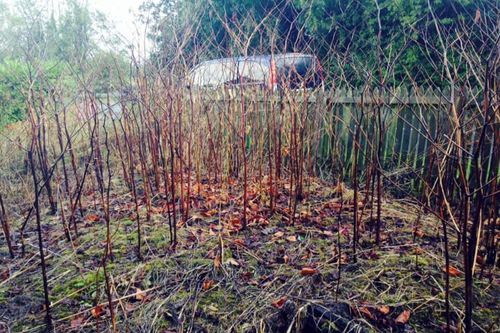
Japanese knotweed (Reynoutria japonica) is easiest to recognise in summer, when dense green stands reach two to three metres. From late autumn the leaves yellow and drop after the first frosts, and by winter all that remains above ground is a stand of dead canes. Many buyers, sellers and surveyors view properties during these months, so knowing the winter signs matters.
1. Dead Canes: The Main Winter Clue
- Colour: canes turn tan to dark brown and look like dry, hollow bamboo.
- Structure: stems are hollow with clear nodes (rings) every few centimetres, and often still bend slightly zig-zag from node to node.
- Brittleness: old canes snap easily and frequently lie collapsed in a tangled mat over the crown.
- Height: standing canes from the previous season can still be well over head height.
2. Crowns and Rhizome at Ground Level
Below the canes sits a woody crown. Scraping back leaf litter often reveals a knuckled, gnarled base. If you snap a piece of rhizome (underground stem) it typically shows an orange to yellow centre. Do not dig or move soil to check: disturbing knotweed can spread it, and contaminated soil is treated as controlled waste under the Environmental Protection Act 1990.
3. Plants Often Confused With Knotweed in Winter
- Bamboo: stays green and keeps its leaves through winter; knotweed does not.
- Himalayan balsam: annual, so it leaves only thin, soft remains that rot away rather than tall woody canes.
- Buddleia and dogwood: solid woody stems with bark, not hollow segmented canes.
4. Early Spring Signs
From around March to April, red-purple asparagus-like shoots push up from the crown, often among last year's dead canes. Seeing fresh red shoots beside brown canes is one of the clearest confirmations.
5. Why Winter Identification Matters for Property
Sellers in England and Wales are asked about knotweed on the TA6 Property Information Form, and the 2022 RICS guidance asks surveyors to note knotweed within or near a boundary. Finding it in winter gives you time to arrange a survey and management plan before the growing season and before marketing the property.
Spotted Brown Canes You Are Unsure About?
Send us clear photos of the canes, the base and any nodes. Our team reviews submissions within an hour and tells you whether a site survey is needed.
Free 1-Hour Photo Review
Enter your postcode, then add photos of the plant on the next step. A specialist replies within an hour.